
Solar System Simulator in Godot
A 3D interactive Solar System Simulator built in Godot Engine featuring editable physics, orbital path visualization, and customizable planet parameters.
Project Overview
The Solar System Simulator is an interactive physics simulation built with Godot 3.2.3. Driven by Newton’s Law of Universal Gravitation, the application serves as a dynamic space environment where users can manipulate gravitational dynamics, inspect trajectories, and control planetary movements in real time.
View on Itch.io | Source Code Repository
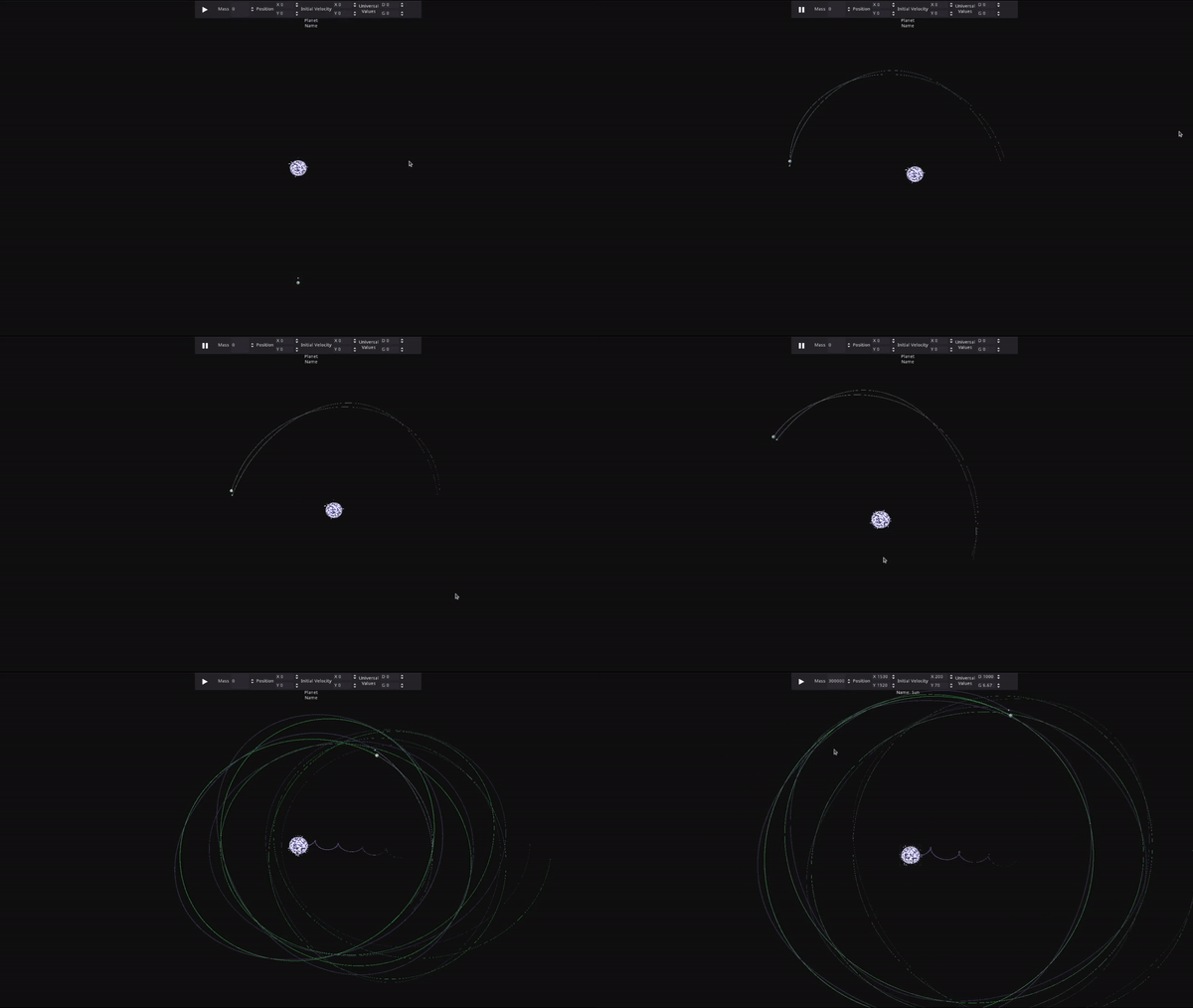
Features & Controls
The simulator provides interactive UI tools and mouse controls to adjust physics parameters dynamically:
- Real-time Physics: Direct control over velocity, planetary mass, positions, gravitational constant ($G$), and distance multiplier constants.
- Trajectory Path Visualization: Render orbital paths dynamically based on current velocity vectors.
- Scalable Body Count: Capable of handling arbitrary numbers of planets defined in the editor.
- Selection & Movement: Left-click to select or hold-and-drag to reposition planets; right-click and hold to navigate the viewport; scroll wheel to zoom.
Technical Details & Installation
This project is built using Godot Engine 3.2.3. Running or opening the source code in mismatched editor versions may result in unpredictable behavior.
- Release Builds: Pre-compiled binaries are available for Windows and Linux.
- Source Code: You can clone the repository directly and export the project following the official Godot Exporting Documentation.
Future Development
Planned updates for the simulator include:
- Dynamic adding and deleting of planets during runtime.
- Multi-selection of celestial bodies.
- Saving and loading custom orbital configurations via JSON format.
References
This project was inspired by and built with help from the following resources:
- Inspiration: Based on Sebastian Lague’s Solar System in Unity.
- Assets: Generated using the Planet Generator For Animation Sprites and open icon packs.